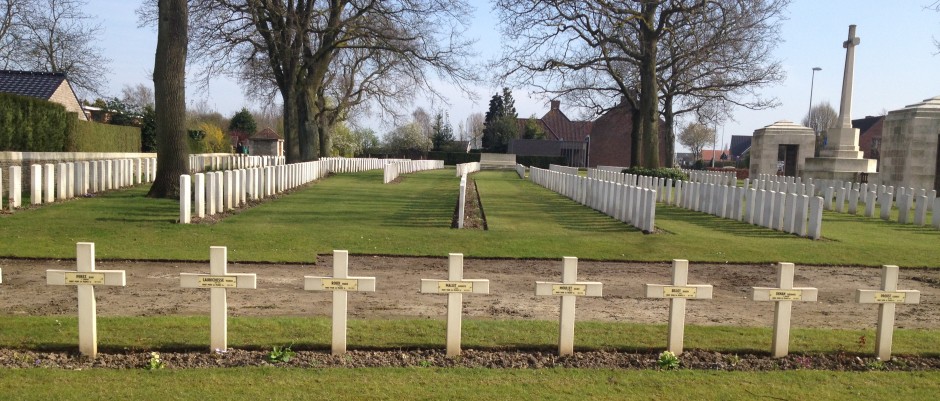
Introduction to my series of Blogs on the Battle of the Marne
Before launching this Centenary Blog, I thought I knew quite a lot about the First World War. I had certainly read a great deal about it, starting with the part-works published during the War, which I found in my grandfather’s house on visits as a boy. Yet I had never realised just how finely balanced the outcome of the Battle of the Marne was. Nor had I understood what an extraordinary cast of characters were involved, from leading players like the Kaiser, Joffre and Kitchener to the critical role played by the relatively junior Colonel Hentsch of the German General Staff.
The part-works I read as a boy featured highly imaginative and misleading artwork by artists comfortably at home, showing the heroic exploits of he British Expeditionary Force (BEF) in 1914, complete with officers brandishing their swords charging in front of their men, and gunners firing their guns to the last, when all about them men and horses lay dead and dying. Of course some of this did not happen but not quite in the way depicted. These images made a big impact on my young mind and I have always been interested in WW1, especially August and September 1914 when there was still the war of manoeuvre – quite unlike the trenches, but equally as bloody – and there genuinely was a chance that “the war would be over by Christmas”.
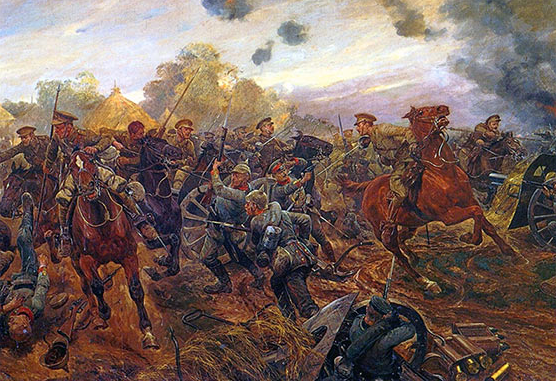
9th Lancers charge German infantry at Elouges by Caton Woodville, Battle of Mons 2nd day (24th August 1914)
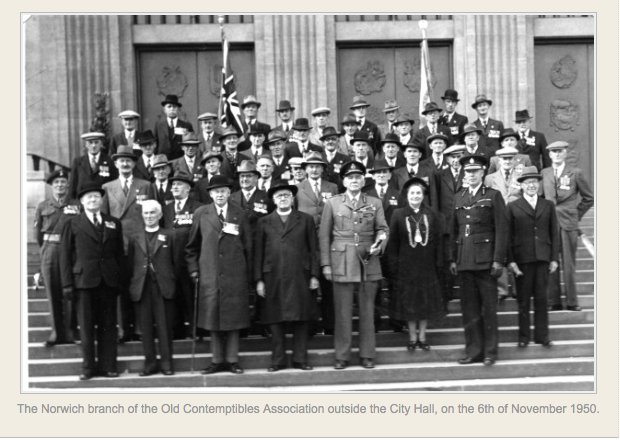
This interest was heightened by the sight of the Norwich Branch of the “Old Contemptibles” every Remembrance Sunday, marching with ramrod backs up the aisle of St Andrew’s Church and standing to attention as the Last Post was sounded, before departing quickly for a well-earned pint or two in the pub opposite.
So I wanted to write a blog about the to get all of this “out of my system”. There was so much I was puzzled by and did not really understand. Then my son asked me a very good question: “What would have happened if the BEF had not gone to France in August 1914 – would the Germans have won and, if so, then what?”
Now, counter-factual history is not really approved of by most proper historians for understandable reasons, as you can tweak the “counter-facts” to prove anything could happen that way. But I agree with the historian Niall Ferguson in believing that – if treated analytically in terms of the reasonable balance of probabilities – a counter-factual (“what if…?”) approach can shed light on why what actually happened, did happen.
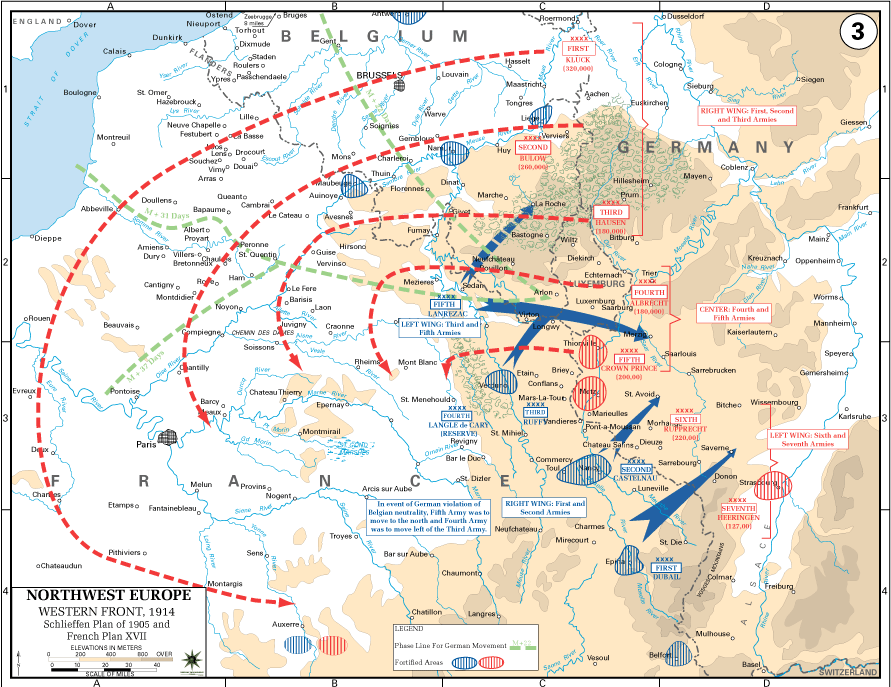
The opposing German Schlieffen Plan and the French Plan XVII. (Courtesy of West Point Military Academy Cartography Dept)
This blog is therefore in three sections:
Section 1
The first and longest is a summary of the contribution – or, in many cases, the failure to contribute – of the BEF in August and the first week of September 1914 to the defence of France;
Section 2
The second is a discussion of whether it was plausible for the BEF not to be there – in other words, could Britain not have declared war on 4 August, and what would the consequences have been for France if Britain had stayed aloof from the War, or even delayed by a week or a fortnight in entering deploying its Army to France; and
Section 3
Thirdly, what would have happened then, in terms of the possible early defeat of France and the end of the War? Would this have been preferable for the World to four years of war and over 17 million deaths – 10 million military and 7 million civilians.
What surprised me was how little I had understood until now, and how extremely close the outcome had been. I had certainly never realised how that outcome hung on instant decisions made by a very few senior politicians and soldiers, many of whom were cracking up under the strain and exhaustion, and some of whom were seriously ill, being both physically and emotionally disturbed.
The final point that astonished me was that the key actions all took place within the very short space of five weeks – from 4 August when Britain declared war to 9 September when the Germans started to retreat from the Marne. In other words, the fate of the World was decided in less time than it took me to research this blog!
 First World War Memorials
Recent Comments